By RFS Technologies
INTRODUCTION
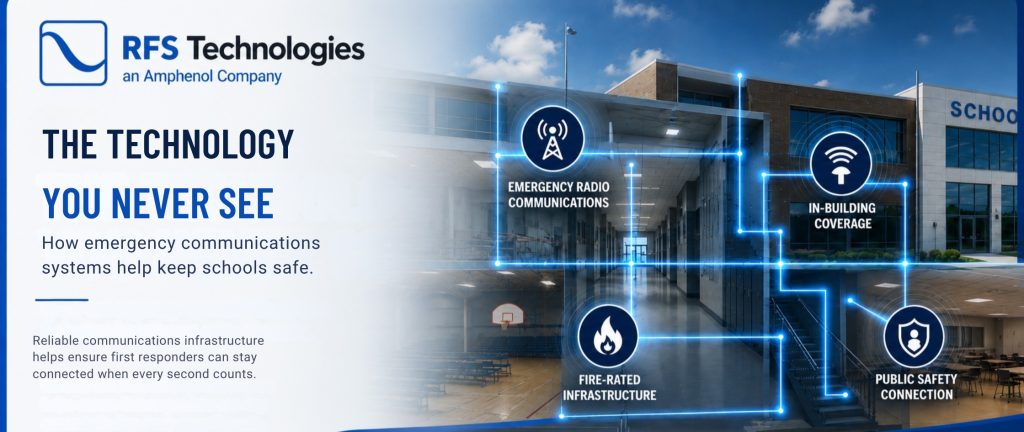
When we think about school safety, we often picture the things we can see: security cameras, locked doors, visitor check-in systems. But some of the most critical safety infrastructure is hidden behind walls and above ceilings. Emergency communications systems ensure that first responders can communicate reliably inside school buildings during a crisis—when every second counts.
SECTION 1: COMMUNICATION CHALLENGES IN SCHOOLS
School safety depends on reliable communication between emergency responders. Yet modern school construction—thick concrete walls, metal roofing, underground levels, and energy-efficient materials—often blocks or degrades the radio signals that police, fire, and EMS teams rely on. Without dedicated infrastructure, first responders may lose contact the moment they enter a building, creating dangerous gaps in coordination during active emergencies.
SECTION 2: HOW PUBLIC SAFETY COMMUNICATIONS TECHNOLOGY HELPS
Distributed Antenna Systems (DAS) and radiating cable technology solve in-building coverage problems by extending and distributing radio signals throughout a structure. A DAS uses a network of antennas connected by cable to capture signals from outside and rebroadcast them inside—ensuring coverage in stairwells, basements, and interior rooms. Radiating cable (also called leaky feeder) emits signal along its entire length, providing continuous coverage in corridors and hard-to-reach areas where traditional antennas cannot.
SECTION 3: WHY FIRE-RATED INFRASTRUCTURE MATTERS
During a fire, communications infrastructure must survive long enough for responders to complete evacuations and suppression. Fire-rated communication pathways—certified to UL 2196 circuit integrity standards—ensure signals continue flowing even as temperatures rise. DragonSkinTM by RFS Technologies is a fire-rated communications cable solution designed to support Pathway Survivability requirements, maintaining critical radio coverage when conventional cables would fail.
SECTION 4: PREPAREDNESS & LOOKING AHEAD
Investing in emergency communications infrastructure supports not only physical safety but also the confidence of parents, educators, and students. Knowing that first responders will be able to communicate effectively inside school buildings creates peace of mind and reinforces a culture of preparedness. As schools modernize, continued investment in these hidden technologies ensures learning environments are ready for the future.
“The communications technology you never see can make the most significant difference when every second matters—connecting first responders, coordinating evacuations, and saving lives.”
TAKE ACTION: START THE CONVERSATION
Talk to your school leaders and local first responders about emergency preparedness and communications readiness. Ask whether your school’s buildings support reliable in-building radio coverage—and what steps can be taken to close any gaps.